


The UK’s four largest listed recruiters, Hays, PageGroup, Robert Walters and SThree, have now reported trading for calendar Q3. Conditions are still mixed, varying by geography and specialism.
Beneath the mixed picture, contract hiring, rising productivity and September’s bid for SThree all suggest the sector has turned a corner.
Q3 trading at a glance
| Calendar Q3 trading updates | |
|---|---|
| Overall tone | Mixed, varying by market and specialism |
| Most cautious | Hays: shares fell after its Q1 FY27 trading update |
| Stronger markets | Japan, the US and southern Europe; Robert Walters also strong in the UK, Australia and New Zealand |
| Weaker markets | Northern Europe, a drag for all four |
| Contract vs perm | Contract ahead at three of the four; SThree’s perm up strongly from a low base |
| Profit levers | Productivity, technology rollouts and cost cutting |
| Leading indicator | US PMI manufacturing new orders in growth (above 50) throughout CY26 |
Why is Hays the most downbeat?
Hays remains the most cautious of the four, and its shares fell on 12 October after its Q1 trading update on financial year ending June 2027.
That update should be read in context. Hays is midway through selling businesses where it sees little prospect of becoming the market leader.
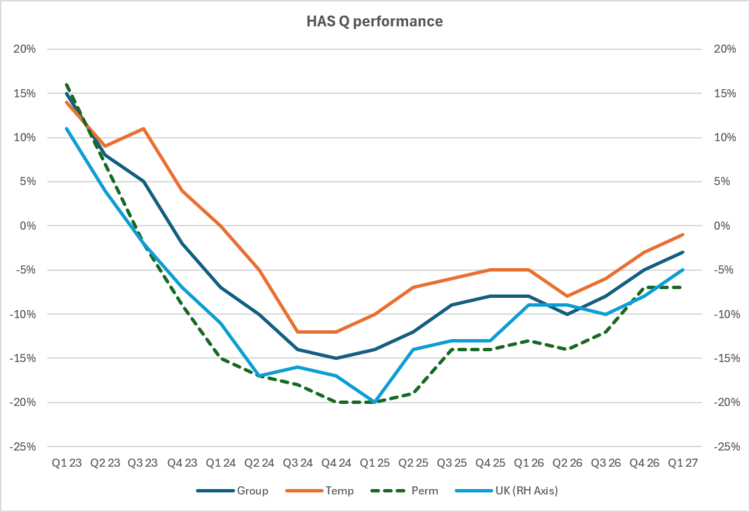
Figure 1: Hays, year-on-year net fee growth by quarter (financial years ending June)
Source: Company trading updates, Equity Development
What is driving profit improvement?
All four recruiters say productivity gains, new technology rollouts and cost cutting are central to improving profit and cash generation in the current year and into CY27.
Two things are behind the productivity gains:
- Better data: technology is giving consultants better information to work with; and
- Higher-value roles: firms are focusing more on higher-paid placements, which earn higher fees.
Which markets are performing well?
Most of the four agree that Japan, the US and southern Europe are performing well.
Robert Walters is growing strongly in the UK, Australia and New Zealand, but its peers aren’t seeing the same in those markets. Northern Europe remains a drag for all four.
Is contract or permanent recruitment stronger?
Contract continues to outperform permanent recruitment at three of the four. The exception is SThree, which reported a strong rise in perm, though from a relatively low base: perm makes up about 15% of its net fees.
Contract has traditionally led recruitment recoveries, and the charts below support the view that the market has turned a corner.
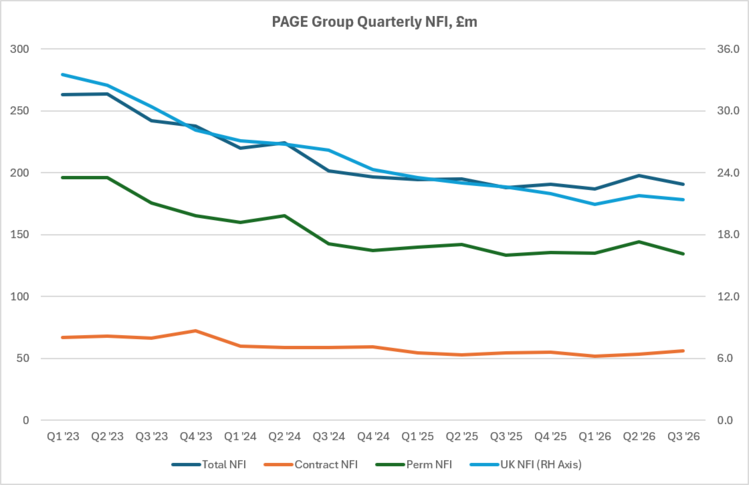
Figure 2: PageGroup, quarterly net fee income (£m)
Source: Company trading updates, Equity Development
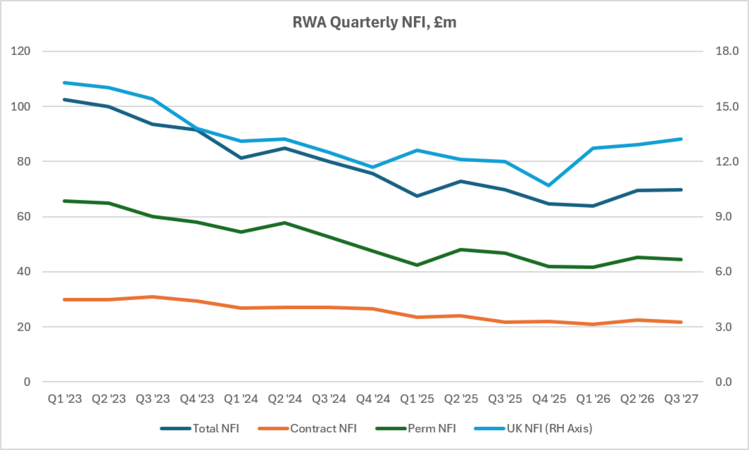
Figure 3: Robert Walters, quarterly net fee income (£m)
Source: Company trading updates, Equity Development
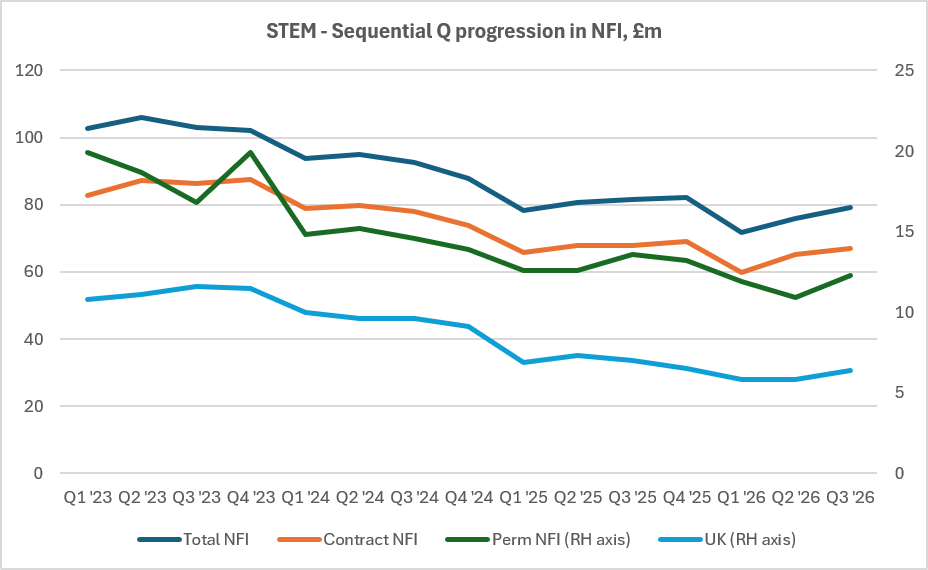
Figure 4: SThree, quarterly net fee income (£m); perm and UK on right-hand axis
Source: Company trading updates, Equity Development
What does the leading indicator say?
Equity Development also tracks a longer leading indicator for the sector: the US PMI manufacturing new orders index. It has stayed in growth territory (readings above 50) throughout CY26.
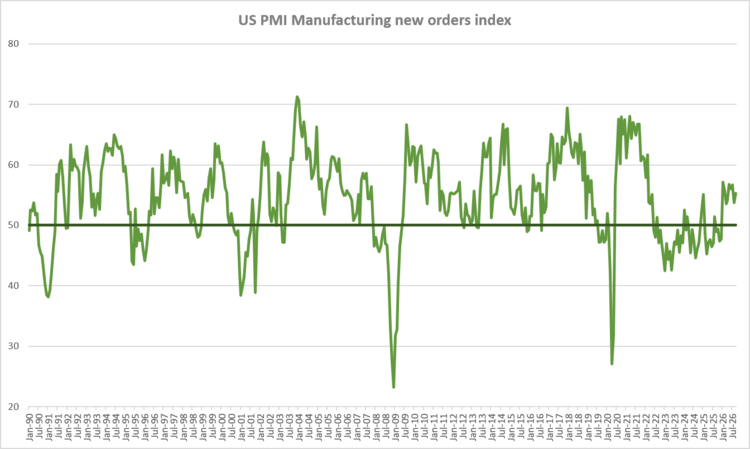
Figure 5: US PMI manufacturing new orders index (50 = no change)
Source: [ISM / S&P Global]
What does the bid for SThree signal?
September’s bid for SThree supports the view that the sector momentum has turned. All else being equal, the balance of forecast changes should move from downgrades to upgrades as we head into FY27.
Why does contract recruitment matter for the outlook?
Contract hiring usually picks up before permanent hiring when the market recovers, so its continued strength is an early sign of improvement.
Outlook
The trading picture is still uneven, but contract strength, productivity gains, a leading indicator in growth and corporate interest in SThree all point the same way. We expect investor sentiment towards the sector to keep improving.
Equity Development’s research is freely accessible to all investors.